

A phase I/II trial evaluates praluzatamab ravtansine (CX-2009), a conditionally activated antibody-drug conjugate, in patients with advanced solid tumours. The study describes its safety profile, the recommended dose and signals of clinical and translational activity across different tumour types, including breast cancer.
What was known
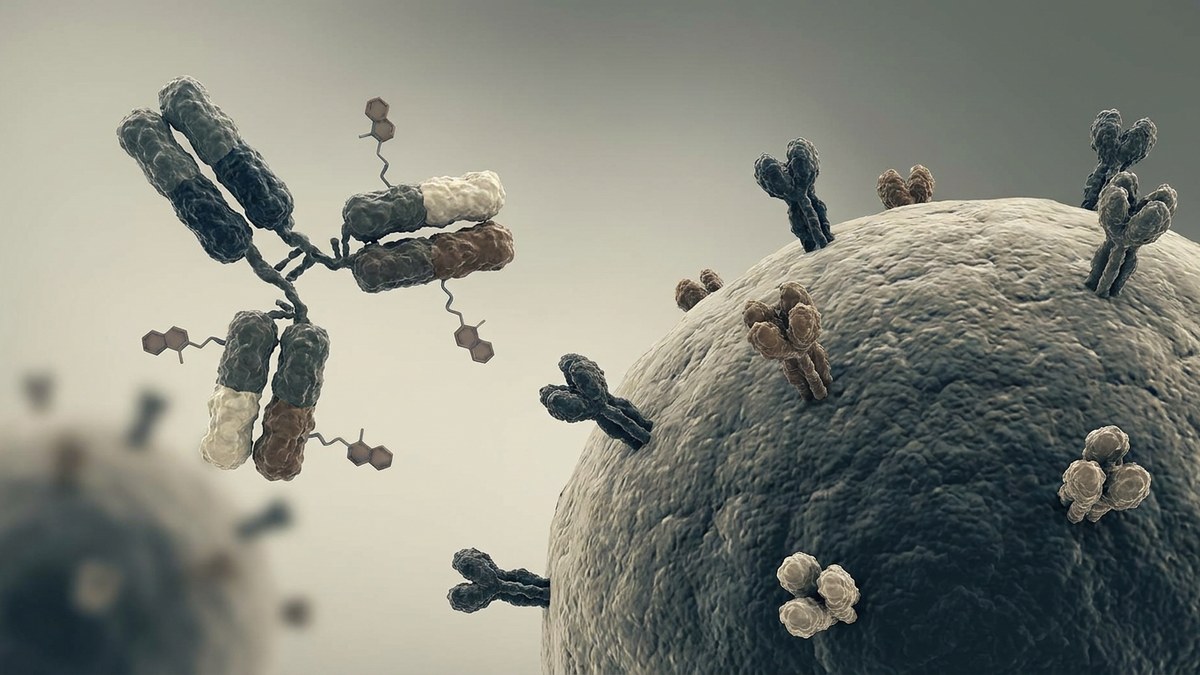
CX-2009 is a conjugate targeting CD166 that incorporates a peptide “mask”: the active agent remains masked in the circulation and in normal tissues, and is only released in the tumour environment, which is rich in proteases able to cleave the linker. Until then it had not been explored in patients with advanced solid tumours.
What this work adds
The trial enrolled patients with metastatic cancer who had received at least two prior treatments. CX-2009 was given at escalating doses every three weeks (0.25 to 10 mg/kg) or every two weeks (4 to 6 mg/kg). The primary objective was to determine the safety profile and the recommended phase II dose.
Main results
Ninety-nine patients were included, and the most frequent subtype was breast cancer (45 patients), with a median of five prior treatments. Dose-limiting toxicities were observed at 8 mg/kg every three weeks and 6 mg/kg every two weeks. On the basis of tolerability, the recommended dose was 7 mg/kg every three weeks. Tumour regressions were observed at doses of 4 mg/kg or above. In the hormone receptor-positive, HER2-non-amplified breast cancer subset (22 patients), two patients (9%) had confirmed partial responses and ten (45%) had stable disease. Imaging with zirconium-labelled CX-2009 confirmed its uptake in tumour lesions and the shielding of major organs, and activated, unmasked CX-2009 was detected in 18 of 22 post-treatment biopsies.
What it means
CD166 is a novel and widely expressed target, and CX-2009 is the first conditionally activated conjugate against it to show translational and clinical activity across several tumour types. For a patient, this is early-phase research: most responses were disease stabilisations rather than reductions. For clinical teams, the value lies in the design of a conjugate that seeks to reduce damage to healthy tissues and in the signals of activity in breast cancer, which justify further research.
Spanish context
Spain takes part in early-phase trials with antibody-drug conjugates, an expanding field within precision oncology. Spanish hospitals with phase I programmes, including private centres in Madrid, contribute to the initial evaluation of these new agents. For breast units, such studies open routes for patients with advanced, already-treated disease, always within a research framework and with target selection as a central criterion.
Reference: Boni V, Fidler MJ, Arkenau HT, Spira A, Meric-Bernstam F, Uboha N, et al. Praluzatamab Ravtansine, a CD166-Targeting Antibody-Drug Conjugate, in Patients with Advanced Solid Tumors: An Open-Label Phase I/II Trial. Clinical Cancer Research, 2022. DOI


