A systematic review and meta-analysis of 15 randomized trials concludes that Meridian sinew tuina (MST), a deep-tissue massage technique from traditional Chinese medicine, is associated with reduced arm swelling after breast cancer, though confidence in the evidence is limited.
What was known
Complex decongestive therapy (CDT) is the standard non-surgical treatment for breast cancer-related lymphedema, but many patients keep experiencing subcutaneous stiffness, pain and restricted mobility. A systematic appraisal of the safety and efficacy of complementary techniques such as MST was lacking.
What this work adds
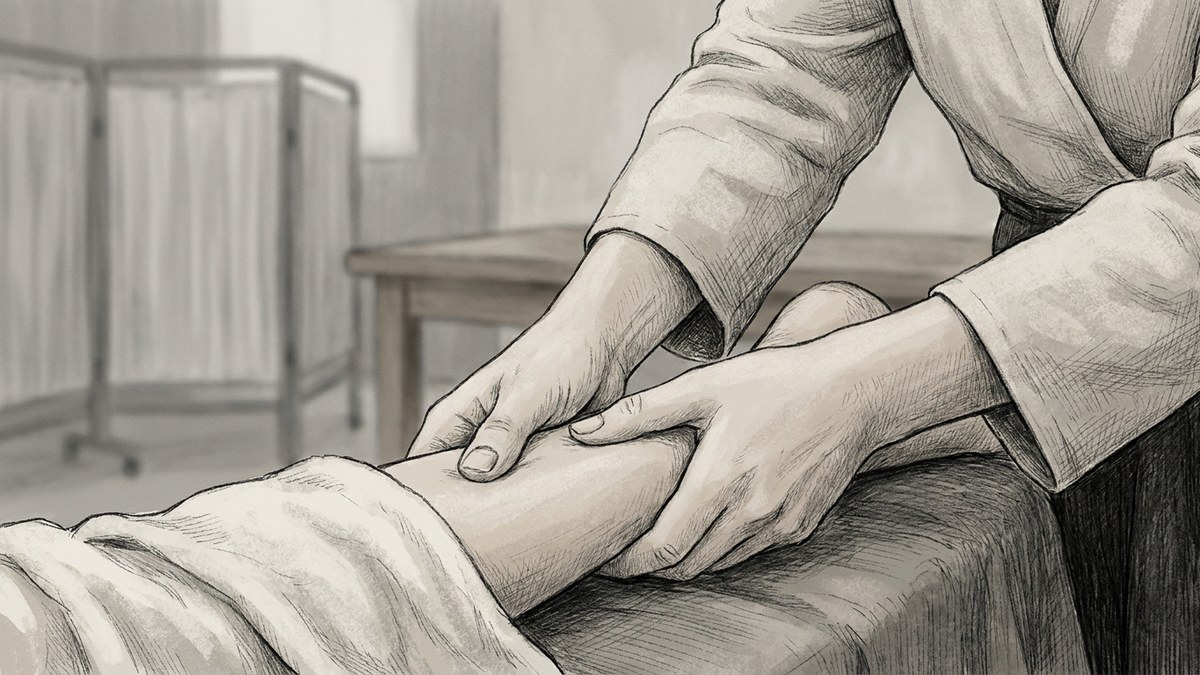
The authors searched international and regional databases (PubMed, Cochrane Library, Embase, Web of Science, CNKI, Wanfang, VIP) from inception to January 2026, with alerts monitored through April 2026. Randomized controlled trials evaluating MST were included, defined as deep tissue mobilization along the six-hand meridian sinew lines through plucking, kneading and pressing. Two reviewers independently extracted data, assessed risk of bias with Cochrane RoB 2 and rated evidence certainty with GRADE using a random-effects model.
Main results
Fifteen randomized trials were included. For the primary anthropometric outcome, MST significantly reduced upper limb circumference versus controls (SMD = 1.59; 95% CI 1.44-1.74; I2 = 0.0%; N = 924; moderate certainty). The clinical response rate (>= 30% swelling reduction with symptom relief) favored MST (RR = 1.69; 95% CI 1.54-1.87; N = 1,114; moderate certainty). Trial sequential analysis confirmed the sample size was sufficient. For secondary outcomes (N = 924; low to very low certainty due to performance bias and clinical heterogeneity), MST showed favorable 3-month improvements in function (DASH: SMD = -1.81), pain (SMD = -2.44) and quality of life (SMD = 1.04). No serious adverse events occurred.
What it means
MST could be included as an optional supportive intervention within cancer rehabilitation, but it cannot be unconditionally recommended as a standalone treatment because of unblinded performance bias and variations between control groups. Better-designed studies are needed to consolidate these conclusions.
Reference: Zhao W, Yang J, Hou Y, Li M. Safety and efficacy of Meridian sinew tuina (MST) for post-surgical upper limb lymphedema: a systematic review and meta-analysis. Journal of Obstetrics and Gynaecology, 2026. DOI.