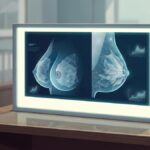
As the prognosis of early HER2-positive breast cancer improves, the idea of safely de-escalating treatment to avoid overtreatment gathers momentum. This review focuses on de-escalation strategies in the neoadjuvant setting.
What was already known
Early HER2-positive breast cancer has seen its prognosis improve markedly thanks to targeted therapies, to the point that many patients may be receiving more treatment intensity than needed. This situation has driven research into how to reduce the therapeutic burden without compromising outcomes.
What this work adds
The article is a review focused on de-escalation strategies for neoadjuvant treatment in HER2-positive breast cancer. It gathers existing initiatives to shorten the duration of anti-HER2 therapy or to reduce the use of chemotherapy agents, and raises the role that predictive or prognostic biomarkers and imaging techniques might play in that process.
Main results
As a review, the work presents no numerical data of its own; it synthesises the state of the art. Its central message is that predictive or prognostic biomarkers and imaging techniques might help identify, within HER2-positive cancer, the subsets of patients most likely to respond to treatment and therefore to benefit from a de-escalated strategy.
What it means
De-escalation addresses a reasonable goal: giving each patient the treatment they need, without excess or shortfall. The key lies in selecting correctly who can be de-escalated, and there the identification of candidates through biomarkers and imaging is a prerequisite. These are approaches that still need validation in clinical studies; the review draws no conclusions about which specific patients can be de-escalated today or by how much, but rather describes the current research framework.
A breast-unit perspective
Applying de-escalation strategies changes how neoadjuvant treatment is planned and underscores the importance of accessible biomarkers and reliable imaging assessment within the unit. It also requires coordination between medical oncology, radiology and pathology to correctly identify candidates.
Reference: Ma Y, Chen D, Huang S. De-Escalation of Neoadjuvant Treatment for HER2-Positive Breast Cancer. International Journal of Cancer, 2026. DOI/link