
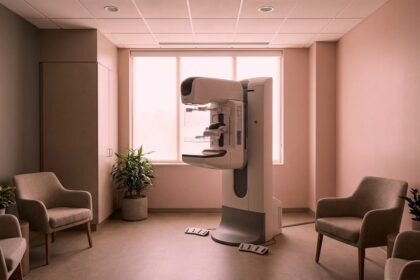
A Dutch model compares five screening strategies for women with extremely dense breasts and concludes that contrast-enhanced mammography is the most cost-effective....

A systematic review and meta-analysis of 17 studies finds that the Breast-CAM questionnaire has high internal consistency (alpha 0.89), yet its structural validity is often insufficient....

A UK study of 1,940 women finds that high breast density and several hormonal and reproductive factors are linked to a higher risk of interval breast cancer, the tumour that appears between two mammog...

A GLOBOCAN analysis across 185 countries estimates 245,827 new breast cancer cases in women aged 15-39 in 2022, 10.7% of the total, with Africa bearing the highest mortality rates....
A national cohort of 7,428 women treated for Hodgkin lymphoma shows a 25% fall in solid tumours with modern radiotherapy, yet breast and lung cancer risk stays high decades later....

Two radiologists classified 1,141 mammograms from breast cancer patients: they agreed almost always except in borderline categories, where detection worsens. Quantitative AI measurement proves more re...
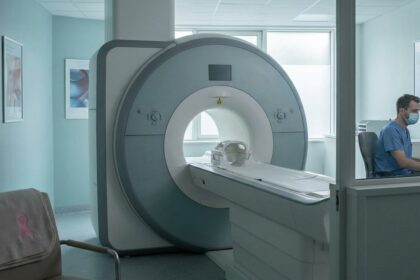
A cohort study of 172,865 examinations compares MRI and mammography by advanced cancer risk: more early detection, but no fewer advanced tumours and many more false-positive biopsies....

A risk-model-agnostic framework maps guideline absolute-risk cut points to mammography intervals, so that personalised screening speaks a common language....

In women aged 67 or older with a history of breast cancer, continuing surveillance mammography beyond five years was not linked to fewer advanced cancers: absolute risk was low in both groups....
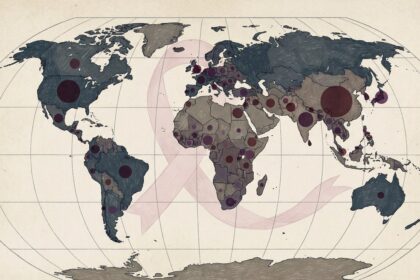
An analysis of the Global Burden of Disease estimates 168,775 new young-onset breast cancer cases in women in 2019 and ranks the African region lowest on quality of care....
In the TOSYMA trial, with nearly 100,000 randomised women, tomosynthesis plus synthesised mammography was linked to fewer invasive interval cancers at two years, although the primary result did not re...

An analysis of 1.69 million ultrasound screening examinations in Shenzhen proposes a two-year interval for women aged 40 to 64, with different BI-RADS management pathways and prompt biopsy for categor...