
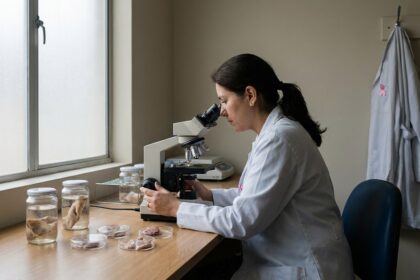
A retrospective study of 253 patients suggests that immune and proliferative features of the tumour influence prognosis in opposite ways in stage I triple-negative breast cancer....

A review describes how gut microbiota dysbiosis and obesity combine to favour the onset and recurrence of breast cancer, and explores interventions targeting this axis....

A review examines initiatives to de-escalate neoadjuvant treatment in HER2-positive breast cancer, aiming to reduce overtreatment without losing efficacy, with support from biomarkers and imaging....

A multimodal framework based on dynamic contrast-enhanced MRI classifies complete or partial response of a breast tumor to neoadjuvant chemotherapy with accuracy above 90%....

A study of 943 patients treated with comprehensive nodal irradiation finds that living in food-insecure areas is associated with markedly lower overall survival, despite similar cancer treatments....

A new DNA methylation model estimates breast tissue age with a mean error of three years and finds that breast tumors do not generally show accelerated epigenetic aging....
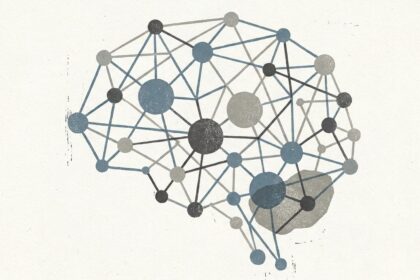
A new computational framework based on persistent homology extracts cancer-associated gene signatures that are sharper and more biologically coherent than conventional gene-selection methods....

A cost-effectiveness analysis from the US payer perspective concludes that the combination does not meet the willingness-to-pay threshold without a price cut of about 80%....

An engineered nanomaterial combines chemodynamic therapy and immunotherapy and remodels the tumor's immunosuppressive environment in preclinical primary and metastatic breast cancer models....

A review of 65 studies finds AI adds most value in imaging and non-linear prediction, while conventional regression is still preferred on structured data....

A review of 14 trials with 2,447 survivors finds that multimodal, professionally delivered therapies work better than minimally structured digital programmes....

Japanese patients and providers find evidence-based videos useful for communicating hereditary risk; only 20% of providers feel they convey all necessary information in consultation....