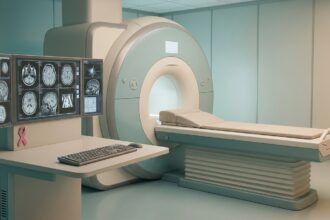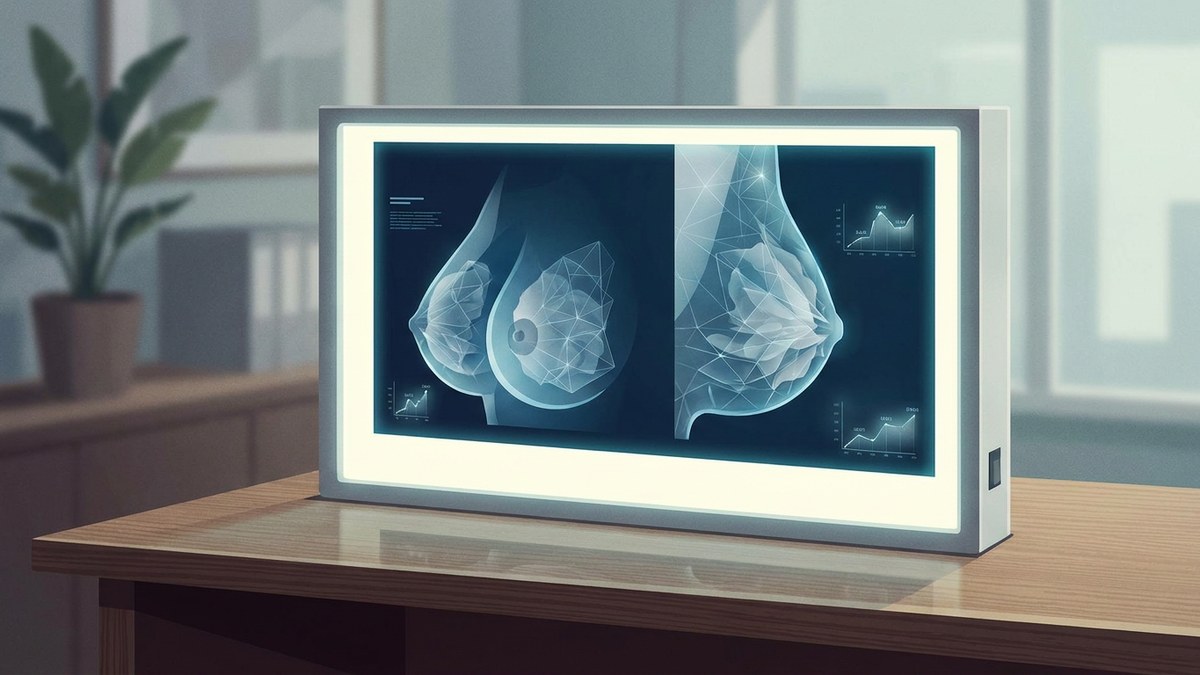
A new machine learning system combines structural, textural and functional information from dynamic contrast-enhanced MRI (DCE-MRI) to classify, non-invasively, the complete or partial response of a breast tumor to neoadjuvant chemotherapy.
What was known
Predicting the pathological response after neoadjuvant chemotherapy (given before surgery) is a relevant clinical task for treatment planning and personalizing therapeutic strategies. Traditional methods rely on expert judgement and can be affected by false positives and false negatives.
What this work adds
The authors propose a multimodal machine learning framework that integrates three complementary feature spaces: quantitative perfusion and geometry parameters obtained from time-intensity curves, which capture the tumor’s vascular dynamics; radiomic features describing intra-tumoral structural and textural heterogeneity; and a late fusion using a Bayesian meta-learner that integrates both descriptors. The clinical dataset comes from Annunziata Hospital (Cosenza, Italy) and includes 33 patients with confirmed response labels.
Main results
To prevent overfitting, a stringent validation approach was applied with nested leave-one-out cross-validation (Nested LOOCV) alongside repeated stratified 5 x 20 cross-validation. Perfusion-based models reached accuracy up to 0.8955, and a radiomic model reached 0.8982 with Mann-Whitney feature selection. The multimodal fusion achieved the best performance: 0.9115 accuracy, 0.9054 F1-score and 0.9488 ROC-AUC with a Random Forest classifier.
What it means
Combining perfusion dynamics with radiomic descriptors from DCE-MRI may allow a more reliable prediction of response to neoadjuvant chemotherapy and reinforces the role of imaging biomarkers in guiding personalized treatments. This is an exploratory study with a small sample, so its results need confirmation in larger cohorts.
Reference: Haddadi YR, Hazarika RA, Raza A, Caputo N, Maiolino A, Sbano R, et al. Integrating radiomic and perfusion kinetics from DCE-MRI for accurate prediction of pathological response to neoadjuvant chemotherapy. Computer Methods and Programs in Biomedicine, 2026. DOI.