

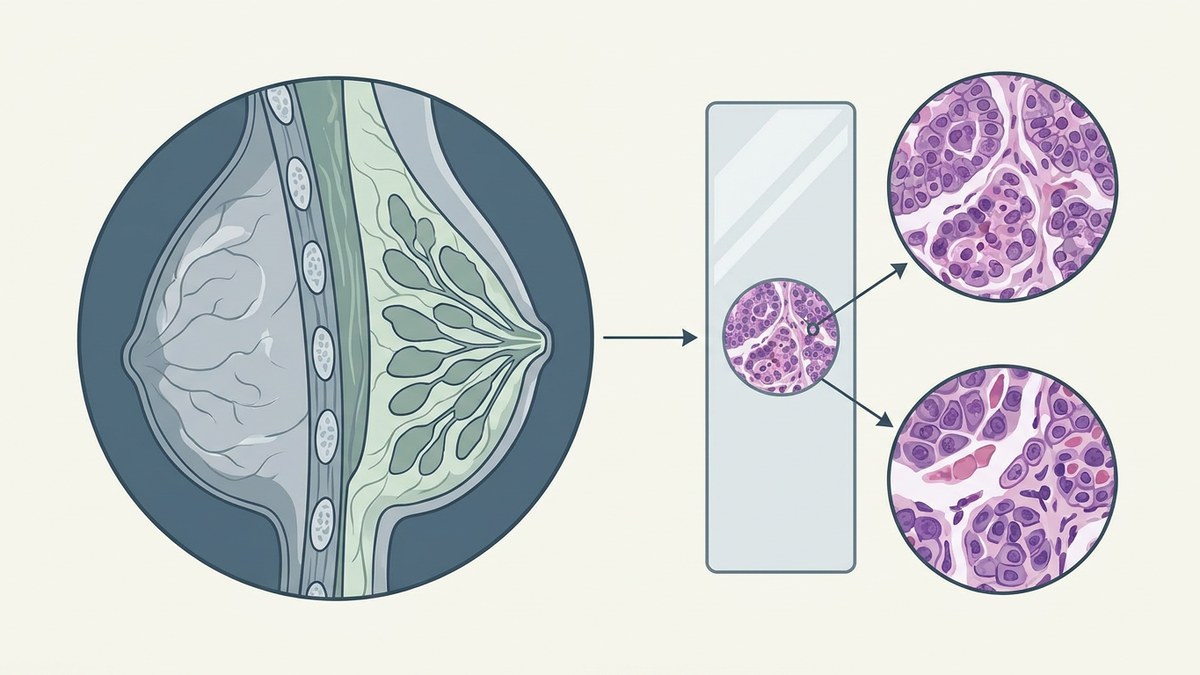
Widespread screening mammography has sharply increased the detection of ductal carcinoma in situ (DCIS), a non-invasive tumour that does not always go on to become invasive cancer. A review published in Cancer Treatment Reviews goes over current treatment and the strategies being explored so that patients with low-risk disease are not treated more than they need.
What was already known
DCIS and other premalignant lesions, such as atypical ductal hyperplasia, form a highly heterogeneous group of non-invasive neoplasms with a variable potential to progress to invasive cancer that cannot be predicted today. Standard treatment for DCIS is breast-conserving surgery or mastectomy, with adjuvant radiotherapy when breast-conserving surgery is performed to reduce the risk of local recurrence. For selected patients with hormone receptor-positive disease, endocrine therapy with tamoxifen or aromatase inhibitors is also recommended.
What this work adds
This is a literature review, not a clinical trial: it orders the available evidence around three ideas, risk stratification, treatment de-escalation and the path towards more personalised care. The authors stress that the rise in DCIS diagnoses has brought the problem of overtreatment to the fore.
Main results
The review describes a familiar paradox: although surgery and radiotherapy improve local control of the disease, they have not consistently shown a survival benefit, which has prompted a rethink of treatment intensity. Emerging approaches combine clinical and pathological factors with molecular and genomic profiles to better estimate the risk of recurrence and progression. Trials are under way evaluating active surveillance in carefully selected low-risk DCIS, and de-escalation strategies that could safely omit radiotherapy or surgery. In lesions such as atypical ductal hyperplasia, the focus is shifting towards risk reduction, surveillance and shared decision-making.
What it means
For patients, the central point is that “in situ cancer” is not the same as “invasive cancer”, and that not every lesion needs the same treatment. The review does not change clinical practice today: it describes where the research is heading. Reducing or omitting treatment should be decided within a clinical trial or as a shared decision with the medical team, never on one’s own.
Reading from the breast unit
The DCIS debate is also a matter of how care is organised: it calls for clear information in the consultation and for pathways that allow close follow-up of patients who choose surveillance.
Reference: Ruelle T, Chiappe E, Lanzavecchia C, Fozza A, Pitto F, Diaz R, et al. Current approaches and emerging strategies in the treatment of ductal carcinoma in situ and premalignant breast lesions. Cancer Treatment Reviews, 2026. https://doi.org/10.1016/j.ctrv.2026.103220