

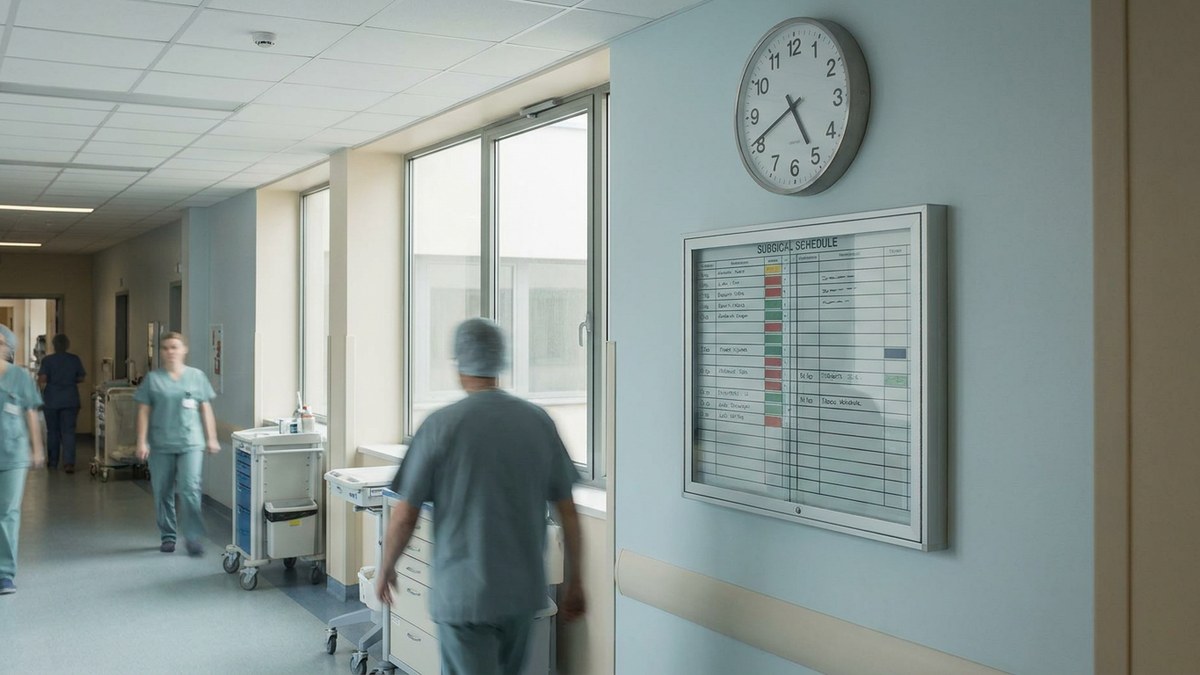
The wait between diagnosis and the operating theatre is not a harmless formality. A meta-analysis of 26 studies and 4,921,120 patients with invasive breast cancer concludes that survival worsens steadily as upfront surgery is delayed: excess mortality is already detectable when women operated on within the first 30 days are compared with those who wait one to two months, and it grows with every additional month.
What was known
Timely surgery has long been regarded as an essential component of quality of care in breast cancer, but the evidence was not conclusive. Published studies mixed very different care pathways and included patients who had received chemotherapy before surgery, a setting in which waiting is part of the plan rather than a delay. A clean estimate of the effect of postponing upfront surgery was missing.
What this study adds
Systematic review searching MEDLINE, Embase, CENTRAL and additional sources up to 25 April 2025. Only quantitative studies, in English or French, assessing time from diagnosis to upfront surgery and prognosis were included, and cohorts treated with neoadjuvant chemotherapy were explicitly excluded. Two reviewers screened studies independently; the analysis used random-effects meta-analysis and meta-regression. The primary outcome was overall survival; secondary outcomes were cancer-specific survival, recurrence and pathological upstaging.
Main results
Compared with surgery within 30 days, waiting 30 to 59 days was associated with higher mortality (hazard ratio, HR, 1.08; p = 0.02); 60 to 89 days with a 12% higher risk (HR 1.12; p < 0.001); and 90 to 120 days with a 37% higher risk (HR 1.37; p = 0.002). Each additional 30-day interval raised the risk of death by 15% (HR 1.15; p < 0.001). The findings held after adjustment, and the analysis showed no relevant publication bias.
What it means
This is an effect measured across populations, not a personal prognosis: a woman who waits a few extra weeks will not necessarily fare worse, and the study cannot show that bringing surgery forward changes the outcome of an individual case. What it does indicate is that, at the level of a health system, time to surgery is a modifiable prognostic factor whose impact begins well before the three months sometimes used as a reference. The authors propose adding explicit surgical timing benchmarks to guidelines and measuring them.
A view from the breast unit
For a breast unit, the interval between diagnostic biopsy and the operating theatre is a simple indicator to calculate and audit. Breaking it down into its components —multidisciplinary team discussion, additional imaging, the decision on reconstruction and theatre availability— shows where the days are lost, which is the first step to recovering them. The study provides no data from any specific health system, but it offers a useful external reference for interpreting local figures.
Reference: Gervais C, Brouillette K, Benzouak T, Altuntur SK, Prakash I, Wong SM, et al. Impact of Surgical Delay on Breast Cancer Prognosis: Systematic Review and Meta-analysis. Annals of Surgical Oncology, 2026. doi:10.1245/s10434-026-20013-8