
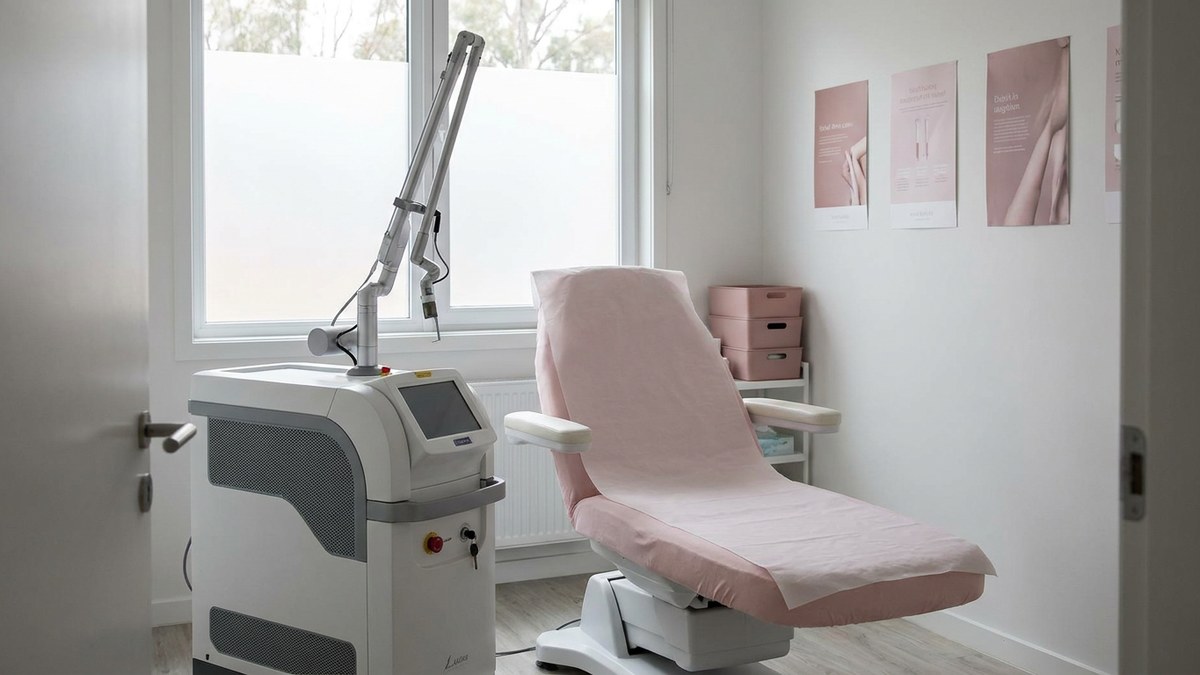
Fractional CO2 laser, widely offered for genitourinary syndrome of menopause, gave no benefit over a sham procedure in women with breast cancer taking aromatase inhibitors, according to a double-blind, sham-controlled trial at a Spanish academic hospital published in JAMA Network Open.
What was known
Genitourinary syndrome of menopause —vaginal dryness, discomfort and pain during intercourse— is common among breast cancer survivors, particularly those on aromatase inhibitors. Local hormonal treatments are not always an option and non-hormonal alternatives bring only partial relief. Fractional vaginal laser has spread into that gap, but sham-controlled evidence was lacking, and that is the only way to tell whether any effect comes from the laser or from the attention received.
What this work adds
This is a secondary analysis of a double-blind randomised trial controlled with sham laser, at a tertiary academic hospital in Spain. Eighty-four breast cancer survivors with genitourinary syndrome and dyspareunia who were taking aromatase inhibitors took part (mean age 53.8 years) and were followed for 12 months. They were randomly assigned to five monthly sessions of fractional CO2 laser or sham laser, and both arms also received first-line non-hormonal therapy, with vaginal moisturisers and vibrators. The trial also measured sexual function, dyspareunia, quality of life, objective vaginal parameters and adverse events.
Main results
The laser group did not differ from the sham group in the change in Female Sexual Function Index (FSFI) score from baseline to 12 months (difference −0.69; 95% CI −3.58 to 2.20; P = .64), nor in any secondary outcome. Across the whole sample, however, there was a significant improvement at 12 months (FSFI from 18.9 to 23.0; mean difference 4.5; 95% CI 3.1-5.9). Sixty-seven of the 84 participants completed follow-up.
What it means
The authors read the improvements seen in both groups as unrelated to the laser and attributable instead to adherence to first-line non-hormonal therapy, to participation in the trial or to contextual factors: the procedure added nothing to what all participants were already receiving. The message is one of caution: before a technique enters routine care, high-quality sham-controlled trials should be demanded. The study does not diminish the value of non-hormonal measures or of professional support.
A view from the breast unit
Techniques that generate expectation reach the clinic before the evidence does, and the only way to avoid spending resources —and the patient’s time— on procedures with no effect is to have sham-controlled trials such as this one. The study also recalls that support and education around basic non-hormonal treatment genuinely weigh on the outcome.
Reference: Anglès-Acedo S, Alonso I, Ribera-Torres L, Mension E, Otero J, Herranz-Diez C, et al. Laser Therapy for Sexual Health in Breast Cancer Survivors Receiving Aromatase Inhibitors: A Secondary Analysis of a Randomized Clinical Trial. JAMA Network Open, 2026. https://doi.org/10.1001/jamanetworkopen.2026.38937