
Every 19 October, World Breast Cancer Day brings the World Health Organization (WHO), scientific societies and patient groups together around an idea the data support: when the tumour is found early, the outlook changes dramatically. In Spain it is the most frequently diagnosed cancer in women and, at the same time, one of those with the best survival.
Why 19 October
The date, promoted by the WHO, serves three purposes every year: to raise visibility, to insist on early detection and to demand equity and research. In 2021 the WHO launched the Global Breast Cancer Initiative, aiming to cut mortality by 2.5% a year and so avert some 2.5 million deaths by 2040.
What the figures show
According to the WHO, 2.4 million new breast cancer cases in women were diagnosed worldwide in 2024 and 694,000 deaths were recorded, and in 164 of the 186 countries analysed it was the most common cancer among women. In countries with a very high human development index, one in 12 women will develop it during her lifetime; in low-development countries, one in 27. Around 80% of cases occur in women with no identifiable risk factors beyond sex and age, so suspicion cannot be limited to those with a family history.
Projections from the International Agency for Research on Cancer (IARC), published in Nature Medicine in 2025, point to a 38% rise in cases and a 68% rise in deaths by 2050: 3.2 million diagnoses and 1.1 million deaths a year. The gap by income level remains huge: in high-income countries 83% of women diagnosed survive, while in low-income countries more than half die.
In Spain, the report “Cancer figures in Spain 2026”, by Redecan and SEOM, estimates 38,318 new breast cancer cases this year, the most diagnosed tumour in women. One piece of context: among Spanish women, lung cancer has now overtaken breast cancer as the leading cause of cancer death, a shift linked to smoking among women.
What early detection adds
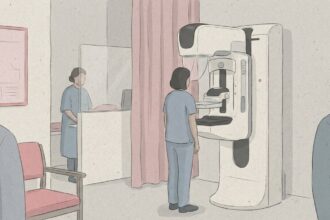
Most of the evidence concerns population-based mammography screening, which in Spain targets women aged 50 to 69 with a test every two years. Systematic reviews put the reduction in mortality at 20%-40% in that group, with greater benefit the more regular attendance is. The 2022 European recommendation opens the door to widening the range to 45-74 and to adding techniques such as tomosynthesis or MRI in dense breasts.
No test is infallible: mammography can produce false positives — leading to further tests and anxiety — and also false negatives. That is why it is still important to seek advice about any persistent change in the breast (a lump, nipple retraction, discharge or a change in the skin) even if the last mammogram was normal.
What remains to be done
Beyond detection, the day highlights three open fronts: reducing inequalities in access to screening and treatment, both between regions and between countries; improving care throughout the disease, including metastatic breast cancer, whose world day is marked on 13 October; and continuing research into earlier detection and treatments tailored to tumour subtype.
Sources: WHO, “Breast cancer” (2024 data) and the Global Breast Cancer Initiative; IARC/Nature Medicine (2025); Redecan and SEOM, “Cancer figures in Spain 2026”; Spanish Ministry of Health, Breast Cancer Early Detection Programme.