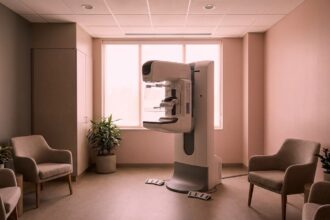
From what age, how often and with which test should breast cancer screening be offered? A systematic review commissioned by the US Preventive Services Task Force concludes that the available evidence still cannot answer those questions with certainty.
What was known
Clinical trials have established that screening mammography can reduce breast cancer mortality. However, the starting and stopping ages, the interval between examinations and the most suitable modality for population screening remained unclear.
What this work adds
The authors searched MEDLINE and the Cochrane Library through 22 August 2022, with literature surveillance through March 2024, for randomised clinical trials and nonrandomised studies comparing screening strategies, with expanded criteria for screening harms. Two reviewers independently assessed eligibility and quality, and data were extracted from fair- and good-quality studies. Seven randomised clinical trials and 13 nonrandomised studies were included; only two of the nonrandomised studies reported mortality outcomes.
Main results
A nonrandomised trial emulation study estimated no mortality difference for screening beyond age 74 years (adjusted hazard ratio 1.00; 95% CI 0.83-1.19). Advanced cancer detection did not differ between annual and biennial intervals in a nonrandomised study. Three trials compared digital breast tomosynthesis with digital mammography: tomosynthesis detected more invasive cancers at the first screening round, but there were no statistically significant differences in interval cancers (pooled relative risk 0.87; 95% CI 0.64-1.17; 3 studies; n = 130,196; I² = 0%). Risk of advanced cancer (stage II or higher) at the subsequent round was not statistically significant for tomosynthesis versus digital mammography in the individual trials. Limited evidence suggested lower recall rates with tomosynthesis. One randomised trial inviting people with dense breasts to supplemental MRI screening reported reduced interval cancer risk (relative risk 0.47; 95% CI 0.29-0.77), together with additional false-positive recalls and biopsies; no longer-term advanced cancer incidence or morbidity and mortality outcomes were available. One randomised trial and one nonrandomised study of supplemental ultrasound reported additional false positives and no differences in interval cancers.
What it means
The conclusion is one of caution: comparing screening strategies requires studies measuring stage shift and mortality, and many are not yet complete. For patients, this does not question the value of screening; it underlines that recommendations on age, interval and test rest on incomplete evidence and may change. Supplemental testing in dense breasts increases detection but also false positives, a balance worth explaining in the consultation.
A view from the breast unit
In Spain, population programmes follow biennial intervals with mammography as the main test. This review is a reminder that any move towards tomosynthesis or supplemental testing should come with outcome evaluation and careful management of recalls.
Reference: Screening for Breast Cancer: Evidence Report and Systematic Review for the US Preventive Services Task Force. JAMA, 2024. DOI