
A breast unit that reorganised its surgical pathway around a dedicated oncoplastic team and direct digital communication between oncology, radiology and surgery raised the proportion of patients treated with breast-conserving surgery from 54.5% in 2016 to 96.1% in 2024. The study, published in the European Journal of Breast Health, summarises eight years of results after the centre’s international accreditation.
What was known
Breast-conserving surgery requires coordinating imaging, tumour localisation and intraoperative assessment of margins. When those tasks are split between departments that share neither information nor timing, delays appear, mastectomy is scheduled for logistical reasons and reoperations for involved margins increase. International accreditation of breast centres aims to streamline these processes, yet few studies document surgical outcomes years after accreditation.
What this work adds
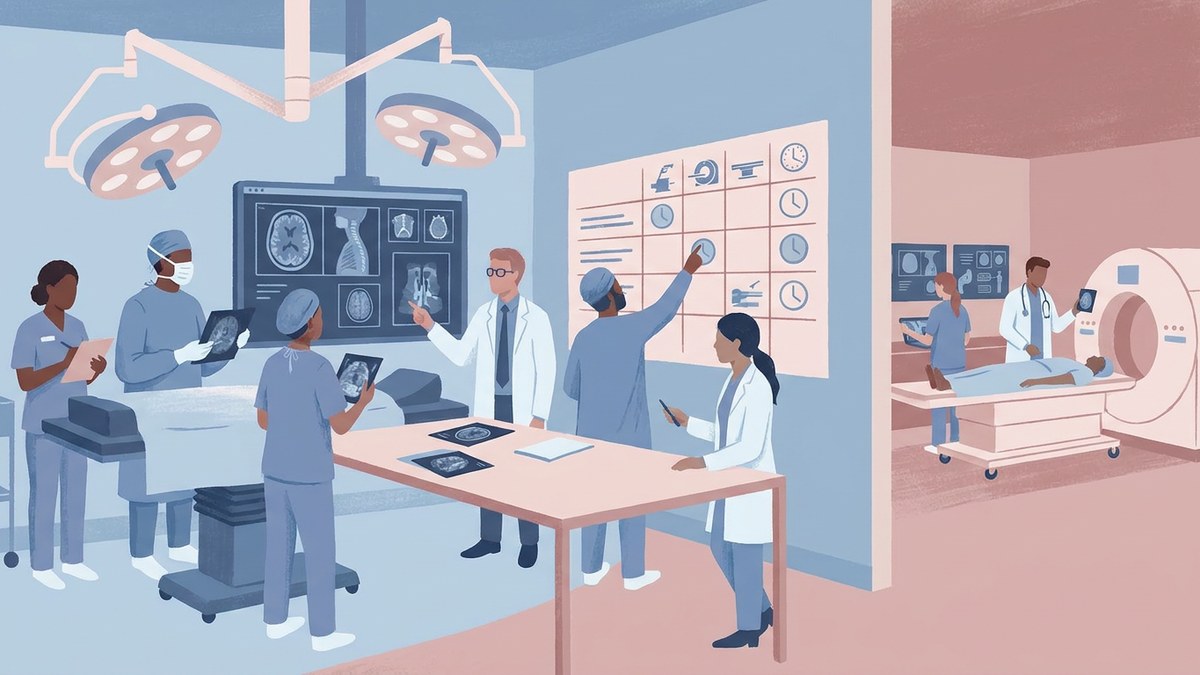
A retrospective analysis of all malignant breast surgeries performed between 2016 and 2024 at a multidisciplinary breast centre accredited in 2016. The authors describe the service in stages: an oncoplastic unit and aligned protocols (2016-2018); real-time radiology support and a pre-surgical localisation pathway (2019-2020); and, from 2021, same-day digital referral from oncology to surgery, intraoperative communication with radiology and pathology review in the operating theatre. Procedures were classified as breast-conserving (wide local excision or oncoplastic conservation) or mastectomy.
Main results
The breast-conserving rate rose from 54.5% in 2016 to 96.1% in 2024. In the pre-digitisation period (2016-2020) the mean was 64.1%; with the digital pathway (2021-2024) it reached 90.8% (1,423 of 1,567 cases; 95% confidence interval 89.3-92.1). Clear margins exceeded 90% in all recent years. The authors link MRI-guided magnetic marker localisation, same-day referral and radiology-pathology collaboration to more breast conservation and fewer re-excisions.
What it means
The change comes not from a new surgical technique but from organisation: who decides, with what information and how quickly. For a patient, the chance of keeping the breast depends substantially on whether the unit has agile pathways between imaging, decision-making and the operating theatre. The authors present 96% as above international benchmarks and note it is one centre with dedicated resources and no control group, so extrapolation requires prudence.
Reading from the breast unit
The study proposes an exercise any unit can run with its own records: measure what proportion of patients reach breast-conserving surgery, how many are reoperated and where days are lost between the multidisciplinary decision and the operating theatre. Accreditation only pays off when it becomes concrete workflows between departments.
Reference: Van Loggerenberg D. Eight-year Post-accreditation Outcomes Following Implementation of an Oncoplastic-dedicated Surgical Team and Digital Same-day Oncology-surgery Workflow. European Journal of Breast Health, 2026. PubMed 42317084