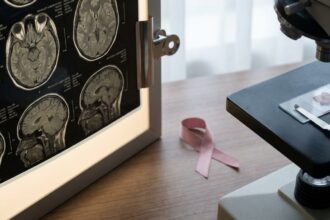
Using artificial intelligence (AI) to score every mammogram and refer only a small fraction of women with a negative screen to magnetic resonance imaging (MRI) can reveal tumours that would otherwise be missed. That is the conclusion of the randomised ScreenTrustMRI trial, published in Nature Medicine.
What was known
Screening mammography reduces breast cancer mortality, but studies of interval cancers —those diagnosed after a negative mammogram— show that some tumours are missed. Supplemental MRI can reduce the number of missed cancers, yet its use is limited: qualified MRI staff are scarce, equipment is expensive and cost-effectiveness in screening is not fully established. An effective method for triaging who should receive supplemental MRI was therefore needed.
What this study adds
ScreenTrustMRI is a randomised clinical trial that used a recently developed AI tool to score each mammogram. Participation was offered to individuals with a negative screening mammogram and a high AI score (top 6.9%). Those who agreed were randomly assigned to receive supplemental MRI or not to receive it. The primary endpoint is advanced breast cancer —defined as interval cancer, invasive component larger than 15 mm or lymph node-positive cancer— with 27 months of follow-up from the initial screen. Secondary endpoints, prespecified in the protocol to be reported before the primary outcome, include cancer detected by supplemental MRI, which is the focus of this paper.
Main results
Compared with traditional breast density measures used in a previous clinical trial, the current AI method was nearly four times more efficient in terms of cancers detected per 1,000 MRI examinations: 64 versus 16.5. Most additional cancers detected were invasive and several were multifocal, suggesting that their detection was timely. According to the authors, using an AI score to select a small proportion of individuals (6.9%) for supplemental MRI after a negative mammogram detects many missed cancers and makes the cost per cancer detected comparable with screening mammography.
What it means
Here AI does not replace the radiologist; it acts as a filter, identifying women most likely to harbour a tumour invisible on mammography and concentrating a scarce, costly resource such as MRI on them. The results available correspond to a secondary endpoint —cancers detected— and the primary outcome on advanced cancer at 27 months is still pending, so they should be read cautiously before considering broad changes to screening programmes.
View from the breast unit
If this triage model is confirmed, screening programmes will need MRI capacity, trained staff and clear pathways for referral and communication of results. It will also require deciding how to inform women with a negative mammogram but a high AI score, and how to ensure follow-up for those who ultimately do not undergo the supplemental examination.
Reference: AI-based selection of individuals for supplemental MRI in population-based breast cancer screening: the randomized ScreenTrustMRI trial. Nature Medicine, 2024. DOI