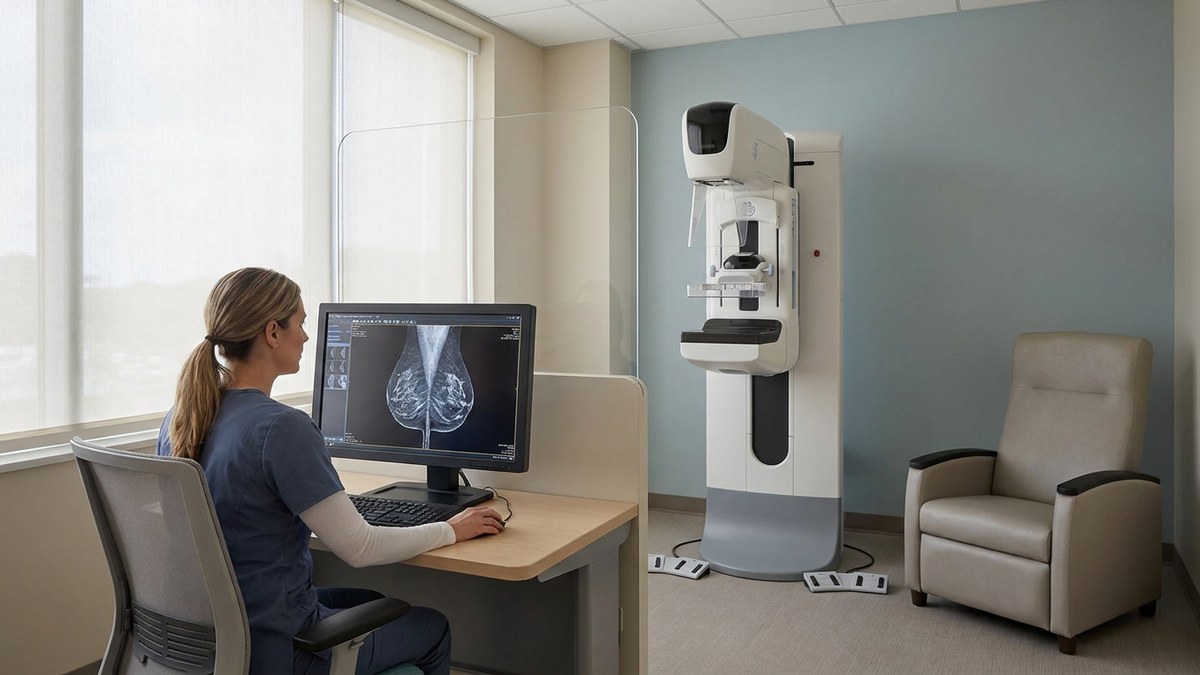
Behind every quality mammogram sits a web of checks, credentials and audits that is rarely explained to the patient. A review published in Journal of Breast Imaging maps that US regulatory framework and details the responsibilities of the radiologist who takes charge of a facility’s technical leadership.
What was known
The Mammography Quality Standards Act (MQSA), passed by the US Congress in 1992, set nationwide requirements to ensure the safety, consistency and diagnostic quality of mammography. Its parts are familiar —equipment, personnel qualifications, quality control, reporting, patient notification and facility certification— but their sum is hard to sustain for the person answerable for all of them at once.
What this work adds
The authors have written a guide that reorders those obligations around a key figure: the lead interpreting physician, the radiologist responsible for interpretation at the facility. It describes the role of federal and state authorities, accreditation bodies and essential personnel; sets out qualification and continuing education requirements for interpreting physicians, technologists and medical physicists; and summarises the processes for communication with patients and referrers, record retention, equipment evaluation and the annual outcomes audit.
Main points
This is not a patient study but a regulatory review, so it offers no clinical figures. Among its contents are the annual FDA inspections, the EQUIP initiative — focused on continuous improvement of clinical image quality — and the most common reasons for inspection deficiencies. It also covers teleradiology, with diagnostic display testing and documentation standards, and the changes in the FDA’s 2023 rule, including mandatory breast density notification.
What it means
Screening quality does not rest only on the eye of the radiologist reading the image, but on a documented system: who may interpret, with which equipment, how their performance is checked, how the result is communicated and what happens when something fails. That architecture is what makes results comparable across facilities. The review also flags a practical point: breast density information, mandatory in the United States since 2023, requires clear communication pathways and comprehensible language.
A view from the breast unit
The transferable lesson is managerial rather than technical: screening programmes rely on quality-control protocols and on the continuing education of their teams, and guides like this one remind us that outcomes audit and clear notification are part of care, not bureaucracy.
Reference: Sanchez AA, Garrett HV, Dave R, Bennett DL, Lee MV. The Lead Interpreting Physician’s Essential Guide: Core Responsibilities of the Lead Interpreting Physician Under the Mammography Quality Standards Act and the American College of Radiology Accreditation Standards. Journal of Breast Imaging, 2026. https://doi.org/10.1093/jbi/wbag053