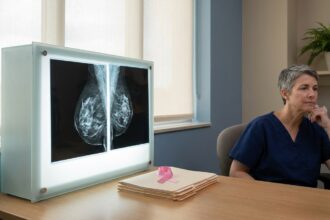
A team from the Netherlands has measured how long each case takes in the breast multidisciplinary team meeting using data that already exist in the electronic medical record and the national cancer registry. The study, published in Breast Cancer Research and Treatment, shows that discussion time is not uniform: it changes with the point at which the case is presented and with tumour characteristics.
What was known
Multidisciplinary meetings are the backbone of decision-making in breast units: diagnosis, surgery, systemic treatment and radiotherapy for each patient are reviewed there. They are accepted to improve outcomes, but they also consume considerable time and resources, and until now there were few systematic ways of measuring how they function without intruding on the privacy of clinical data.
What this work adds
This was a retrospective study combining data from the Dutch national cancer registry with hospital electronic medical records between 2014 and 2018. Discussion times were estimated from timestamps recorded in the medical record, excluding outliers, and the analysis was carried out with ethical approval and only for patients who had not exercised their right to opt out. After removing incomplete, duplicate and atypical records, the final dataset comprised 1,048 tumours, 996 patients and 1,487 discussion times.
Main results
Discussions of pre-operative cases and of cases in which no surgery was planned were significantly longer than post-operative ones (p = 0.000). Among pre-operative cases, duration was associated with the availability of MRI, tumour differentiation, malignancy, menopausal status and stage. In post-operative discussions, molecular subtype, stage and tumour size mattered, whereas age, differentiation grade and menopausal status had no impact.
What it means
The study does not assess whether patients live longer or receive better treatment: it describes a tool for understanding the real workload of the meeting and for identifying which types of case demand more time. That information can help plan sessions better and review internal organisation, using a method that draws on data already recorded and that the authors describe as feasible and compliant with data protection rules.
A view from the breast unit
Knowing in advance which cases take longer helps set the agenda and reserve time for complex pre-operative discussions instead of allocating time evenly. Measuring discussion duration is a simple way to audit how a breast unit works and to spot organisational bottlenecks.
Reference: Kočo L, Sanderink WBG, Prokop M, Mann RM. Factors influencing discussion duration in breast cancer multidisciplinary team meetings: insights for streamlining care. Breast Cancer Research and Treatment, 2026. DOI